Protect Earth
Grassland restoration by the square meter
Grassland restoration by the square meter
A species rich grassland or wildflower meadow in the full bloom of high summer, alive with bees, grasshoppers and brightly coloured butterflies, is one of the British landscapes’ most intoxicating wildlife habitats. Sadly, they are now also one of the scarcest; the vast majority having been ploughed or fertilised into oblivion. Most wildflower meadows that remain are found on nature reserves where they are carefully managed or, literally, hanging on to very steep, uncultivable hillsides. With your help Protect Earth can restore more.
What Are Grasslands
An established wildflower meadow might have as many as 30-40 different plant species per square metre (plus all the other attendant invertebrates and birds that depend on them). In comparison, modern pastures may only have two or three species. Wildflower meadows are some of the most bio-diverse habitats in Britain, and the specialist insects that inhabit them are some of the rarest.
Why Restore Grasslands?
The UK has lost 97% of its wildflower meadows, and this has huge impacts across our native British flora and fauna. Certain species of flowers and all the insects they support are on the brink of going extinct, and the bird populations that rely on that food source are struggling too. Bringing back these rare ecosystems on apprpriate sites provides good variation in habitat from woodlands, and often we pair the two together with some woodland, some meadow, or an area of woodland pasture or "oak savannah" that provides some of the best of both.
Chalk grassland is only found in north-west Europe, and a significant proportion of this is in the warm and dry southern counties of England, extending up into the Yorkshire Wolds. Limestone grassland is more widely distributed and in the UK is found on the western and southern coastal strips, the Cotswolds and Mendips, and reaching up in the Derbyshire White Peak, Morecambe Bay and eastern County Durham. Our land in the Cotswolds gives us a good chance to restore a large chunk of this critical habitat.
How We Restore Grasslands
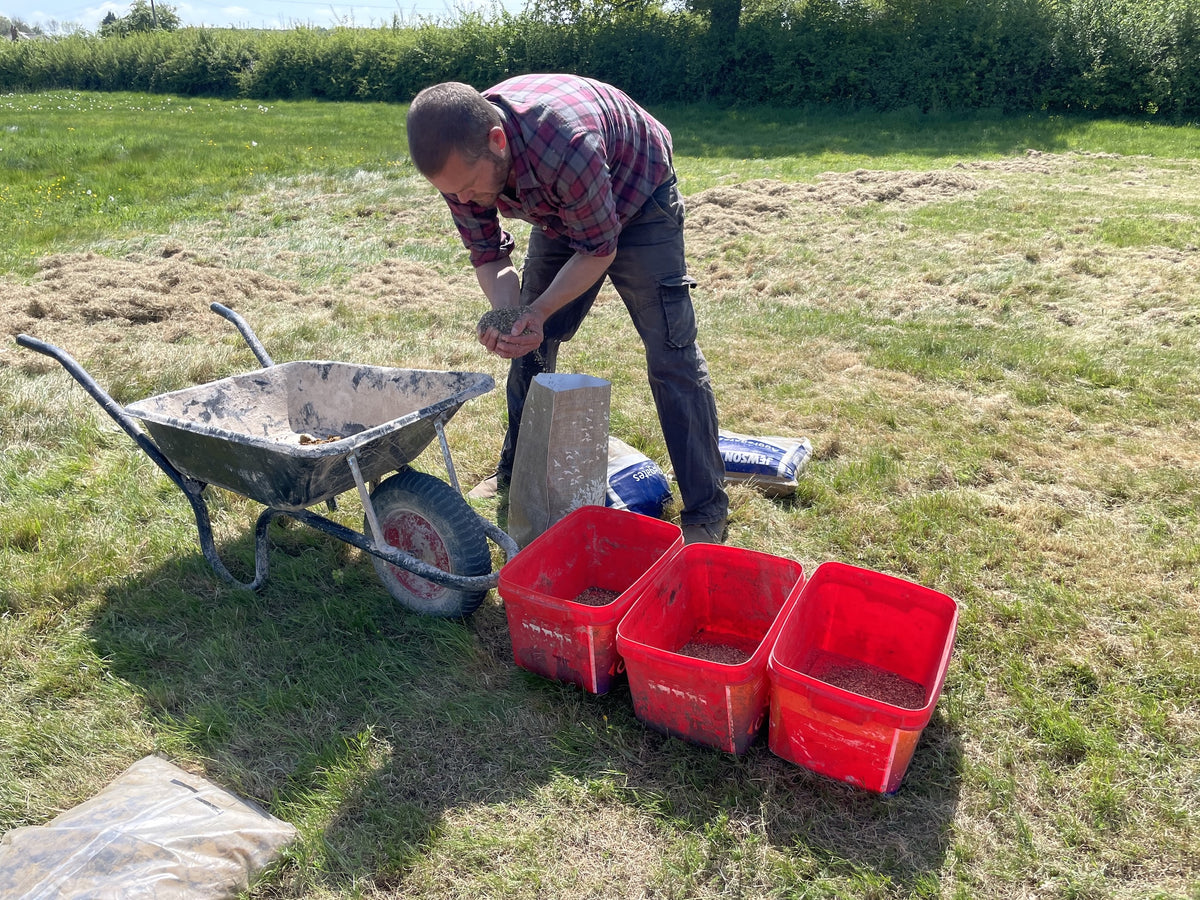
Wildflower meadows are particularly tricky ecosystems to develop. Counterintuitively, they require nutrient-deprived soil, which requires experience and time to reach the right conditions. They are a lot of work to maintain. But the benefits outweigh the difficulties - they are very intricate places that become home to so many insects and animals and are incredibly beautiful and satisfying when all the insects and animals move in.
Currently we are working to restore lots of lowland calcareous grasslands, which are incredibly unique in that they require very specific geological conditions (thin soil on top of chalk), then very particular management.
Conservation grazing is likely used, either borrowing lots of cows short term at the right time of year for a very intensive but short "mob graze", or getting a handful of resident cows in across a huge area for ongoing but low intensity grazing. These animals replicate the effect of the missing Bison and Aurochs lost long ago,a and help push back scrubby encroachment and nutrient buildup on the soil to allow these grassland species to thrive.
What You Receive
You will receive a receipt letting you know we received your generous sponsorship, and as soon as restoration work is assigned to you it will be emailed over with a certificate showing you where it is.
If you get a square in Warleigh Nature Reserve, you can come along to a volunteering day and we'll happily point you to it